Throughout the history of NJEA, progress has never been static. It is a continuous, living movement shaped by the educators, educational support professionals and student advocates who refuse to settle for the status quo. From establishing foundational protections for public school employees to spearheading inclusive curriculum statewide, NJEA’s commitment to equity has always evolved as our understanding of identity, community and advocacy deepens.
Today, as the NJEA Sexual Orientation and Gender Identity (SOGI) Committee celebrates our 25-year anniversary, we stand at another pivotal crossroad in that journey. As we look back on where we began—and look forward to the work ahead—our committee has taken the final step and is now the NJEA Rainbow Alliance Committee. This evolution is more than a simple cosmetic update; it is an intentional, strategic step toward expanding our circle, strengthening our coalition and clarifying our core purpose.
From caucus to standing committee
In the early 1990s, LGBTQIA+ NJEA members began meeting as the unofficial NJEA Lesbian, Gay and Bisexual Caucus, creating opportunities for advocacy, education, networking and community. Their efforts helped pave the way for greater queer representation within NJEA.
In 2000, the NJEA Executive Committee authorized a task force to address sexual orientation and gender identity issues. After a year of study, the task force recommended establishing a permanent committee. In 2001, NJEA created the Sexual Orientation Issues in the School Environment Committee, with Carol Watchler serving as its first chair.
As its advocacy expanded, the committee became the Sexual Orientation and Gender Identity (SOGI) Committee in 2009, affirming NJEA’s commitment to transgender and gender-nonbinary members alongside lesbian, gay and bisexual members.
That commitment was further institutionalized in 2024, when the NJEA Delegate Assembly approved a bylaws amendment officially establishing SOGI as a standing committee of NJEA.
Why we are evolving: Inclusion, clarity and allyship
While clinical and academic terms like “SOGI” serve a purpose in legal and policy contexts, they do not always capture the vibrant, human-centered community we build every day. In listening to our members across local associations, school districts and county affiliates, three clear needs emerged that led us to the Rainbow Alliance:
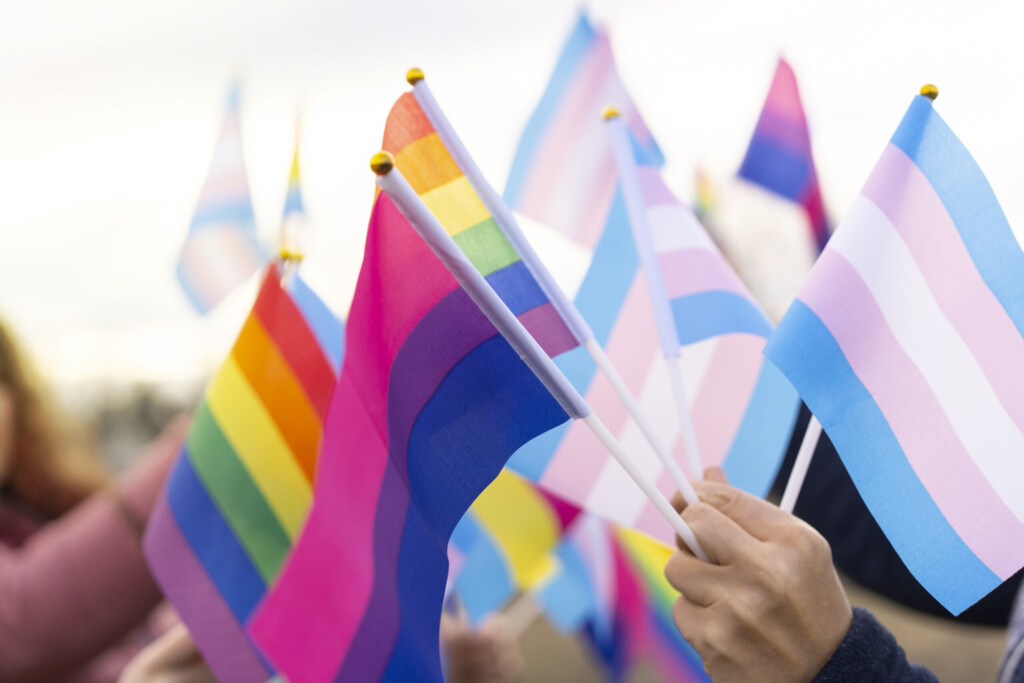
1. Building a truly inclusive space: Language should welcome people in, not leave them guessing. The rainbow symbol explicitly reflects the full spectrum of our community—celebrating lesbian, gay, bisexual, transgender, queer, intersex, asexual and gender-nonconforming educators and students in all their diversity.
2. Fostering active allyship: Defending public education and LGBTQIA+ rights requires a united front. By grounding our identity in an alliance, we intentionally invite allies into the work. Effective allyship isn’t passive support; it is active participation in creating safe, affirming schools.
3. Clarifying our purpose: For members new to union involvement or seeking support, acronyms like SOGI can be an unintended barrier. Becoming the Rainbow Alliance removes ambiguity, instantly signaling to every NJEA member who we are, what we stand for and how we can support them in their schools and locals.
The next chapter of union solidarity
Transitioning to the NJEA Rainbow Alliance renews our core mission: ensuring that every educator can bring their authentic self to work, and every student sees themselves reflected and protected in their learning environment.
At a time when school communities face unprecedented challenges and efforts to erase LGBTQIA+ voices, our union’s response must be clear, visible and unwavering. We are stepping into this next era with a renewed commitment to advocacy, professional development, coalition building and member support.
As we adopt the banner of the Rainbow Alliance, we invite every member—whether you identify as LGBTQIA+ or as an ally dedicated to equity—to join us at our table. Together, we continue our history of progress.