In today’s political climate, it has become increasingly difficult for many members who are forced into marginalization to speak out against injustice, especially within systems that promise protection but often fall short. The challenge grows heavier when you don’t know how to raise your voice or where to begin. In a unionized workplace, we are taught to believe that solidarity is automatic, that a united front will rise to defend every member. But the truth is more complicated. There comes a moment when you realize that you are not just an employee, you are a union member with both rights and responsibilities. The support we expect from leadership must be matched by our own willingness to stand, speak and show up for one another.
Many members do not fully recognize the influence they hold. Paying dues is not the end of your participation, it is the beginning. Your voice, your vote, your presence and your advocacy shape the direction of your local. When members forced into marginalization truly begin to understand their power, they shift the culture of the union itself. Education is key: learning your contract, attending meetings and understanding grievance procedures are essential steps toward empowerment.
Too often, members expect union leadership to “fix” every issue without contributing to the solution. Leadership cannot advocate effectively without member involvement, documentation and collective pressure. A union is not a service you purchase; it is a community you help build. When members disengage, leadership becomes isolated. When members participate, leadership becomes stronger.
Five steps to build the tools to speak up in your local
- Learn your contract – Knowledge is your first line of defense.
- Attend union meetings – Presence builds confidence and community.
- Find a mentor or ally – Someone who can guide you through processes.
- Practice speaking in small spaces – Build your voice gradually.
- Engage in equity training – Strengthen your understanding of systemic issues and how to challenge them.
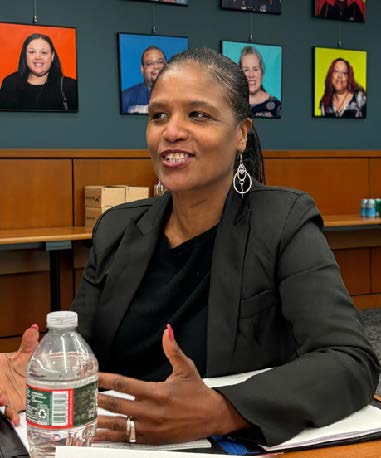
MaDonna Morris-Chisolm
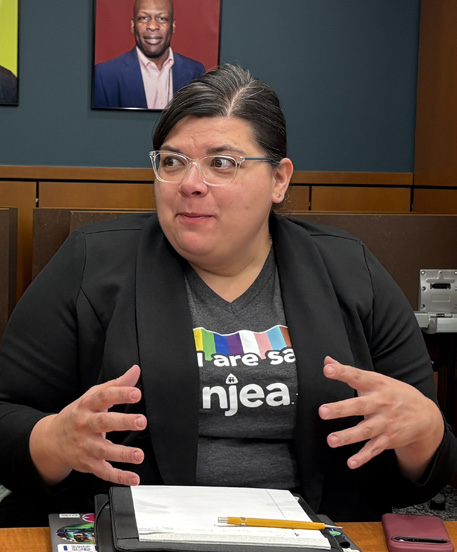
Nicole Cerqueira
Speaking up beyond your local
Your local is not the only place where your voice is needed. Seeking opportunities to speak outside your local can be a way to affect change in your community. Unfortunately, many school employees are reluctant to speak out about the issues they care about because they know that in some ways their freedom of speech is limited. Members are both private citizens and government employees and whether or not their speech is protected depends on the context and the subject matter of that speech. So how do we know when our speech is protected as school employees? As per the NEA article, The First Amendment – Protections for Educators, there are three questions we should ask ourselves when considering speaking out.
Limits to speech
First, your speech is likely not protected if it is in the context of you carrying out your official job duties. Wearing a pin in support of your preferred political candidate is fine if you are at the movies on a Saturday night, but not ok to wear at the school football game where you are selling concessions.
Second, is the speech personal or about a public matter? Our speech is most strongly protected when we are addressing matters of public interest. Making a Facebook post about how ICE raids are hurting your community would be protected, whereas a post about how a colleague took your parking spot may not be.
Lastly, you must consider whether the school has a good reason to limit speech. Speech that is disruptive or disrespectful may not be protected in the interest of schools ensuring a safe and orderly workplace.
What else can members do?
Speak out publicly about what is happening in your communities. Join a local social justice organization, attend peaceful protests and attend public meetings, including board of education meetings, to share your issues with the wider community.
School employees see problems firsthand every day, and telling your stories can help people understand what your community is struggling with and what can be done about it. Write an op-ed or a letter to your elected officials. Use social media to help amplify your message and mobilize people around shared concerns. When on social media, correct misinformation when you see it and provide clarity to help others understand the issues.
Some things to consider when choosing to use your voice to call out injustice
Being thoughtful about strategy before speaking out can shape the outcome of your speech. Will your voice have an impact, or will it get lost or be dismissed?
- Choose the right venue. Choosing the appropriate time and place ensures that what you’re saying will have the broadest impact.
- Learn policies and procedures. Many venues have specific rules about how and when the public can speak. Inform yourself of these beforehand so that your message can be received in the best possible light.
- Join with others. Use your existing networks to expand your reach, coordinate your messaging, and share responsibilities to avoid burnout.
- Assess the risks. Make sure you understand the limits to your rights to free speech, the digital footprint of your actions and the impact your speech may have on professional and personal relationships.
The fight for justice begins with courage, knowledge and collective responsibility. All members deserve safety, dignity and support, which begins with understanding our own power. When we stand together, we do more than resist injustice; we build a future where every member’s voice is heard and valued.