
The pattern started before summer
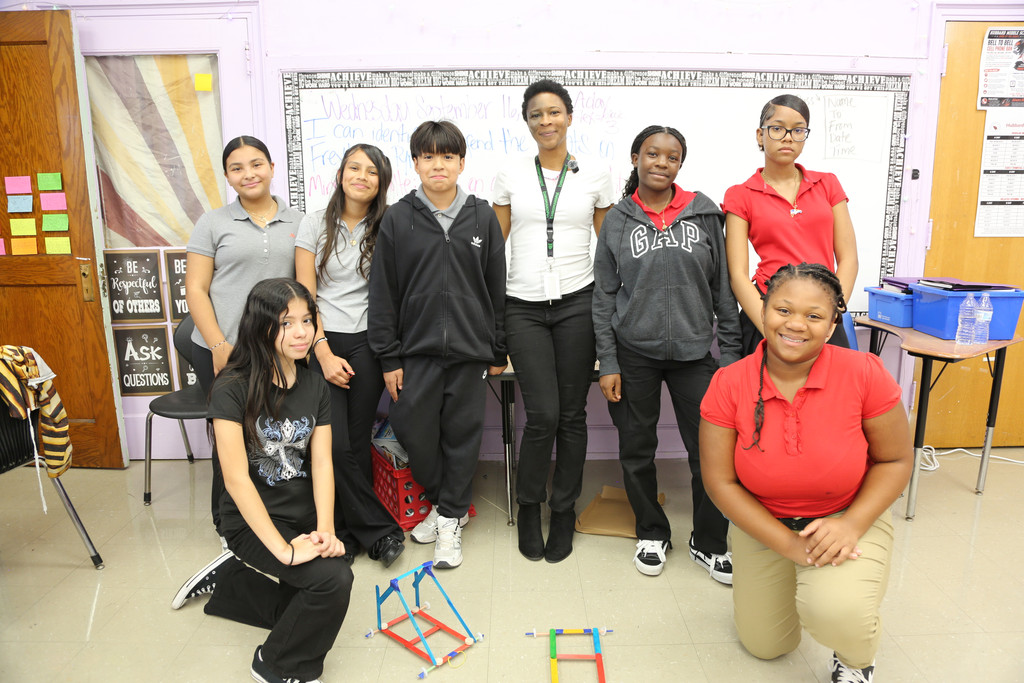
The pattern did not begin in July. It appeared months earlier, quietly, in enrollment lists and course rosters. In STEM-aligned electives, girls were there, but easy to overlook. In some rooms, they made up less than a third of the class. In others, they filled seats but not the moments that signal belonging, explaining, demonstrating or standing at the front with hands on the prototype and a voice that carries.
Roster patterns also revealed a quieter sorting. While STEM and technical electives skewed male, courses such as dance, art and choir carried heavier female enrollment. In many cases, students were not actively choosing between these options. Placement decisions had already shaped the pathways they entered, reinforcing participation patterns before interest or confidence could fully develop.
By the time I began my work within a 21st Century Community Learning Center (21CCLC) STEM Project-Based Learning program in July, the pattern felt familiar. The boys stepped forward easily. The girls hung back, not disengaged, not uninterested, but watchful. They worked. They contributed. They supported. What they did less often was claim the roles that made their thinking public.
This was not about motivation. Nor was it about ability or confidence. It was about visibility. And once you see that, you cannot unsee it.
Participation was never the problem
In the early weeks of the program, girls participated fully. They collaborated in groups. They completed builds. They solved problems. They shared ideas, often quietly and often within small circles.
What they did less frequently was explain their reasoning out loud, present design decisions or lead demonstrations. Those moments, the visible ones, were where leadership was being defined. Participation can be quiet, but visibility is public.
When leadership is left to volunteering, speed or comfort, old patterns resurface. Students who are used to being seen step forward again. Others wait, not because they lack ideas, but because the system does not require their visibility.
Girls were not opting out of STEM. They were being under-positioned within it. This is often framed as a confidence gap. What the summer revealed was something else entirely: confidence followed structure. When opportunity was guaranteed, leadership showed up.
A small moment that changed everything
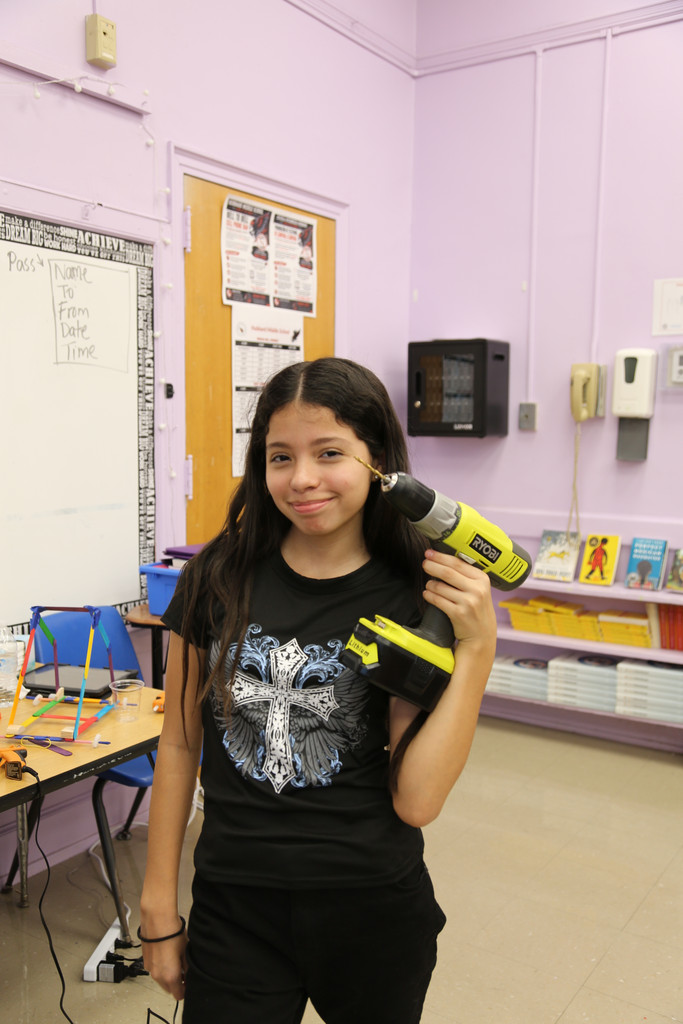
One afternoon, groups of students tested slingshot cars that they had built from recycled materials. One at a time, each group came to the start line to test the track before the big race. By the time the last group approached, the rest of the room had drifted. Students talked among themselves, replaying their own results, until the final car launched, veered sharply left and crashed into the wall. Suddenly, all eyes were on that group.
The lead builder reached for the car to make an adjustment. Before he could, the quietest girl in the group stopped him.
“Wait.” The room hushed. “The axle’s uneven.”
She was right.
In the early weeks, that comment might have stayed inside her head. That day, she was the Design Explainer. It was her role to speak.
She stepped forward, held the car up and explained the imbalance to the class. She suggested a fix. The group tested the car again. This time, the car traveled straight.
The room shifted, not dramatically and not loudly, but noticeably. Her explanation was clear. Her reasoning was sound and her leadership visible. Nothing about her changed in that moment, rather, the structure changed.
Being outnumbered does something to a space before instruction even begins. It shapes who moves first, who speaks without being invited and who is assumed to know.
Rather than asking girls to speak up more or encouraging them to lead, I implemented approaches that quietly place responsibility on students. Three structural shifts reshaped participation across the program.
1. Roles were assigned and rotated
Every STEM task came with clearly defined leadership roles: Design Explainer, Build Lead, Quality Checker and Presenter. These roles rotated on a predictable schedule. Everyone served in each role. There were no opt-outs and no races to volunteer.
Rotation removed habit from group work; students could no longer default into familiar positions. Leadership was no longer something you claimed. It was something you practiced.
For girls who were outnumbered, this mattered. Visibility was no longer a risk. It was an expectation.
2. Share-outs became predictable
Presentations followed a routine. Students knew when they would speak, what they were responsible for explaining and how long they had.
Predictability lowered the stakes. Students were not being put on the spot. They were fulfilling a role. For students who are often overlooked, including girls and multilingual learners, this mattered. Public explanation became normal, not performative.
3. Visibility was treated as instructional work
Leadership was not incidental. It was planned. Girls led tours during showcases. They explained prototypes to visiting adults and they facilitated stations. They did these things not because they volunteered, but because the design required it.
The curriculum did not change. The materials did not change. The design did.
When leadership is left to volunteering, speed or comfort, old patterns resurface.
What changed when the system changed
Once the structure shifted, participation followed. Girls handled tools because their role required it. They explained reasoning because explanation was expected. They narrated revisions, defended design choices and troubleshot failures in front of peers and adults.
Their thinking moved from the margins to the center.
By the end of the program, girls held nearly half of all visible leadership roles, up from just over one-fifth in the opening weeks. These gains appeared across grade levels, suggesting that visibility is not about age or readiness, but access. The girls did not transform. The system did.
The gap was never capability
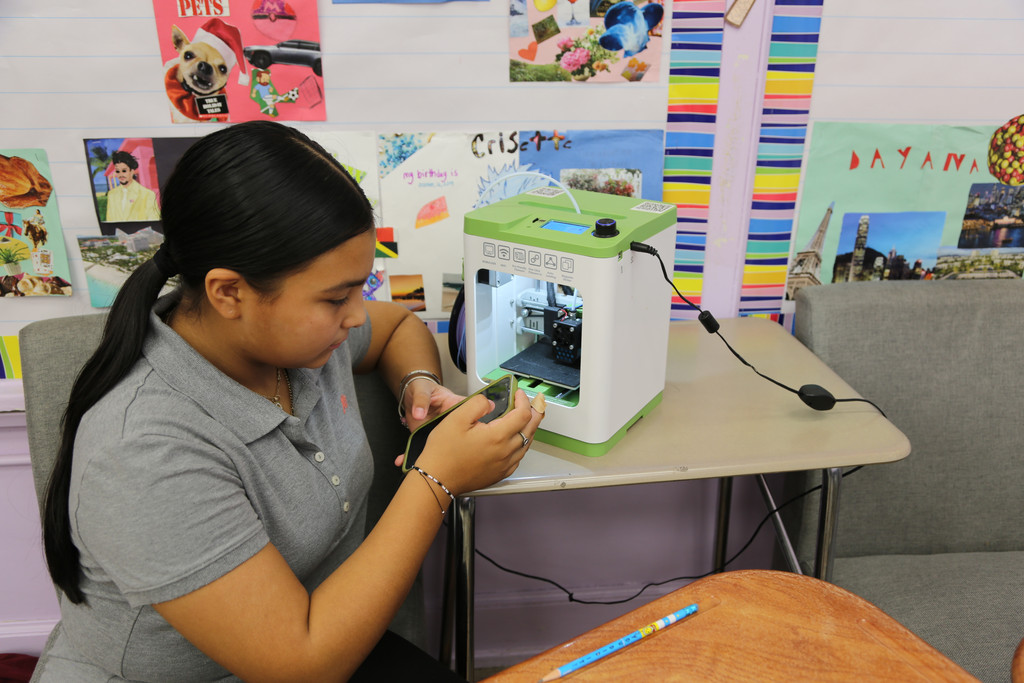
In districts where girls, especially girls of color and multilingual girls, are underrepresented in STEM and CTE pathways, visibility becomes more than engagement. It becomes access.
Students who regularly explain, demonstrate and lead are more likely to be seen as capable by peers, educators and themselves. Those perceptions matter. They shape recommendations, course selections and who sees themselves belonging in advanced pathways.
When girls are outnumbered, their presence is noticeable, but their leadership is not always assumed. Without intentional design, they enter STEM spaces already carrying the weight of disproving expectations.
The summer showed something important. When the environment guarantees access to visible leadership, girls step into it naturally. Their explanations are strong, their designs are thoughtful and their leadership is undeniable.
What this means for educators across roles
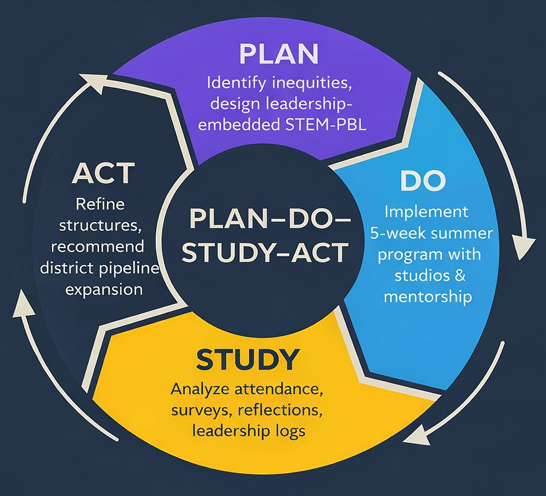
This work offered lessons that extend beyond summer programming and apply across public school contexts:
- Participation and visibility are not the same.
- Equity is built through structure, not encouragement.
- Role rotation interrupts bias and habit.
- Predictable routines protect students who are often overlooked.
- STEM identity grows when students are required to articulate their thinking publicly.
Girls do not need to be told they belong. They need systems that expect their leadership.
While this work took place in one summer program, the structures described here reflect choices that individual educators and teams can make within their own contexts.
What schools and Out-of-School-Time (OST) programs can do now
Designing for visibility does not require new curriculum or expensive materials. It requires intention. The following suggestions can be carried out by simply rethinking program design:
- Audit enrollment and participation patterns before instruction begins.
- Assign and rotate leadership roles in all STEM tasks.
- Make explanation a routine expectation, not a special event.
- Track who speaks, who leads and who is seen.
- Treat visibility as an instructional outcome, not a byproduct.
When we design for who is seen, we change who belongs.
The gap
When girls are outnumbered in STEM spaces, participation patterns will repeat unless adults disrupt them. The solution is not more encouragement. It is not confidence workshops. It is not asking students to be braver.
The solution is design.
Once the system guaranteed access to visible leadership, girls stepped forward with clarity and competence. Their STEM thinking became public and their leadership became routine.
The gap was never in the girls. The gap was in the design.