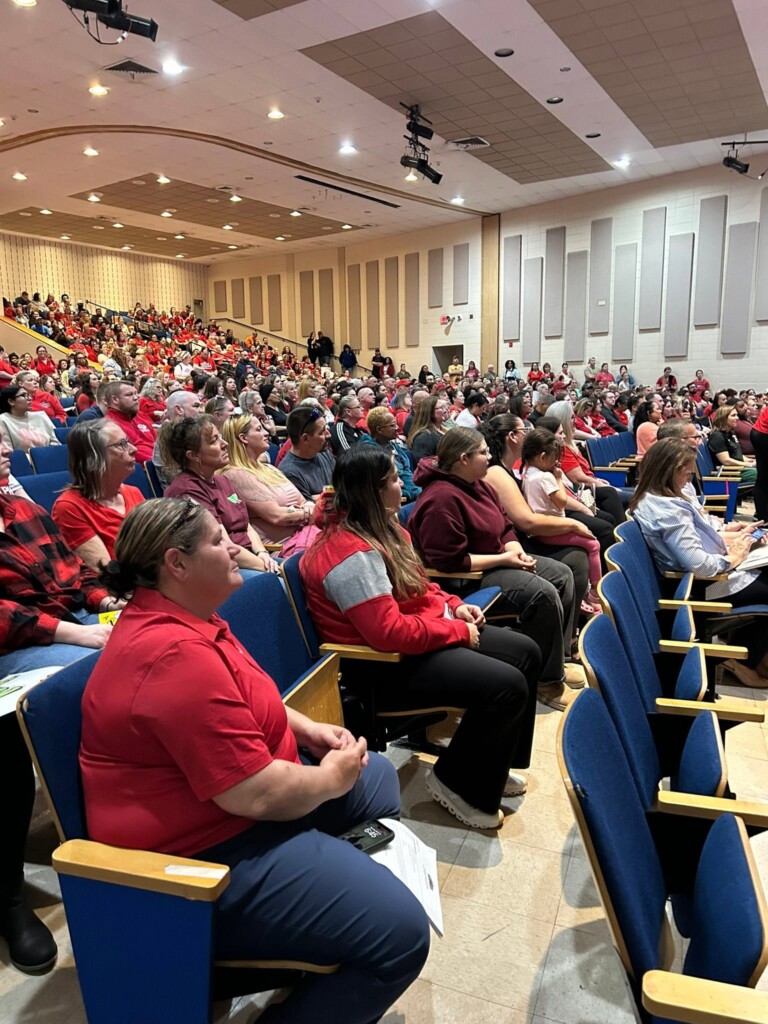
There is nothing more gut-wrenching than watching colleagues stand in front of a board of education meeting and plead for the job they have spent years dutifully performing. The sheer act of having to justify your value and defend your career in public is not only heartbreaking but demeaning.
Year after year, many local education associations across the state find themselves organizing their members and the community to fight for the jobs of their Education Support Professional (ESP) colleagues as boards of education look to privatize services to make up for budget shortfalls.
The profiteering off public education
As funding cuts from the Trump administration continue, and as inflation and the cost of health insurance puts increased pressure on school district budgets, private contractors such as Kelly Education, ESS (formerly Source4Teachers), Aramark, Insight Global, EduStaff, First Student, Sodexo and Educational Services Commission of New Jersey (just to name a few) have the perfect opportunity to position themselves as cost-saving alternatives for public schools.
They promote their services as solutions to financial challenges and labor costs, with the promise of transparency and efficiency allowing more time for the school district to focus on students and school success.
Educators know better.
The primary purpose of these private contractors is not to enhance public education, support students or provide quality staff; it is to turn one of the public’s most democratic institutions into a profitable marketplace.
The human cost of privatization
ESPs consisting of paraprofessionals, teacher’s aides, secretaries, custodians, maintenance workers, bus drivers, food service aides and security personnel, are usually the lowest paid positions in a school district and the first staff members who face elimination when boards of education must deal with funding cuts, inflation and increasing salary and benefit costs.
Though many boards of education members, school business administrators, superintendents and sadly, some members of the public, believe that ESPs are expendable, they are not. In fact, they are essential members of the education community who support our students and keep our buildings safe, clean and running efficiently. They are skilled and knowledgeable professionals who collaborate with teachers and build relationships with students and parents. Many live and pay taxes in the community where they work, but too many ESPs struggle financially and must work a second job just to make ends meet.
Privatizing, outsourcing or subcontracting ESP jobs all mean the same thing: handing over control of staff and services that were once managed by a school district to a third-party corporation that only seeks to make a profit off of taxpayer dollars.
A 2023 report by In the Public Interest found that through a combination of local, state and federal funding, approximately $800 billion is spent annually on K-12 public education school budgets nationwide. For private corporations, these public dollars represent a lucrative opportunity, so they devise marketing strategies and messages to help promote privatization as a solution for the financial challenges school districts face, all the while looking to capture a share of these public dollars.
The idea of corporate takeover of public education is nothing new. The push toward privatization has been in the works for decades. In 2007, the Mackinac Center for Public Policy published “A School Privatization Primer,” a guide encouraging school districts to contract out what they deemed as non-instructional services.
Privatizing ESPs not only eliminates full-time positions which may provide health insurance and retirement benefits; it replaces staff who are dedicated to and invested in students and the school community, thereby weakening the institution of public education itself. When services are subcontracted, school districts no longer have control over the quality of staff employed by the subcontractor and the public has limited influence on how their tax dollars are being spent because private contractors are more concerned about their profit than student success.
Privatization changes the school culture by replacing ESPs with temporary workers who may not have the same motivation, institutional knowledge or skills to build the academic, social and emotional relationships that support student success.
ESP Bill of Rights
ESPs are not only facing the threat of privatization; they are also at risk of losing full-time employment altogether. To cut costs, districts may reduce employee schedules to 29.5 hours or less, to avoid providing health insurance and pension benefits. Any ESP who works less than 32 hours a week is no longer in a pension plan but is instead enrolled in a Defined Contribution Retirement Program (DCRP) which is a savings account, not a financially secure pension annuity. This strategy strips hardworking ESPs of the benefits they have earned, such as healthcare and retirement security, and forces many dedicated school employees into financially unstable part-time positions.
This is why it is critically important for all NJEA members to champion the NEA framework for the ESP Bill of Rights (see sidebar). This framework of values promotes and respects the contributions ESPs make in the school community and public education, emphasizing the need for protection from outsourcing, work hours manipulation and benefit slashing.
Change must begin with recognition and respect for ESPs and the work they do to support safe, effective and successful learning environments. Until those who make decisions about school staffing, including school board members, superintendents, business administrators, lawmakers, the public and even fellow educators fully recognize the value of ESPs, these professionals will continue to face changes and upheavals to their employment, working conditions and financial stability. ESPs keep our schools running and our students safe, healthy and ready to learn every day. They deserve to be respected and recognized as accomplished professionals, not expendable ‘gig’ workers.
The 10 Articles of the NEA ESP Bill of Rights
Fair compensation
One job should be enough! ESPs should not have to work multiple jobs to maintain financial independence.
Recognition and respect
ESPs play a vital role on the education team and in students’ lives inside and outside the classroom. They keep our schools running and our students safe, healthy and ready to learn every day. They deserve to be respected and recognized as accomplished professionals.
Safe and healthy work environment
ESPs deserve a safe and healthy workplace that is free of violence, including physical, verbal and emotional abuse, and free of exposure to hazardous materials. ESPs deserve clear safety protocols, appropriate supplies, safely maintained equipment, training on workplace regulations and whistleblower protections.
Affordable healthcare
ESPs should have access to affordable health insurance.
Paid leave
ESPs deserve paid leave, including personal days, sick days, parental/caregiver leave and Family and Medical Leave Act (FMLA)
Professional learning and career advancement
ESPs deserve high-quality, job-related professional learning and accessible opportunities for career advancement. Seniority rights must be protected when ESPs pursue promotions or request transfers and at times of layoffs or furlough.
Workload and staffing
ESPs have the right to a workload that allows them to excel in their assigned positions. ESPs deserve a voice in establishing fully staffed shifts, clear work protocols and resources that support their careers.
Retirement
ESPs have the right to a secure retirement. All their years of service should count toward a pension.
Protection from privatization
ESPs should be free from threats of privatization that risk the stability of school communities, silence the voice of employees and further undermine the value of the services they provide.
Right to bargain
ESPs deserve a strong voice in their workplace that includes the right to join their union and advocate for the rights and protections they deserve. Bargaining and advocacy ensure that ESPs can enhance student learning and improve educator working conditions, benefiting students, schools and the community.
To learn how you can join the movement, visit
ESP Committee
njea.org/educational-support-professionals
ESPAN
njea.org/espan
ESP Bill of Rights | NEA
nea.org/nea-esp-bill-rights