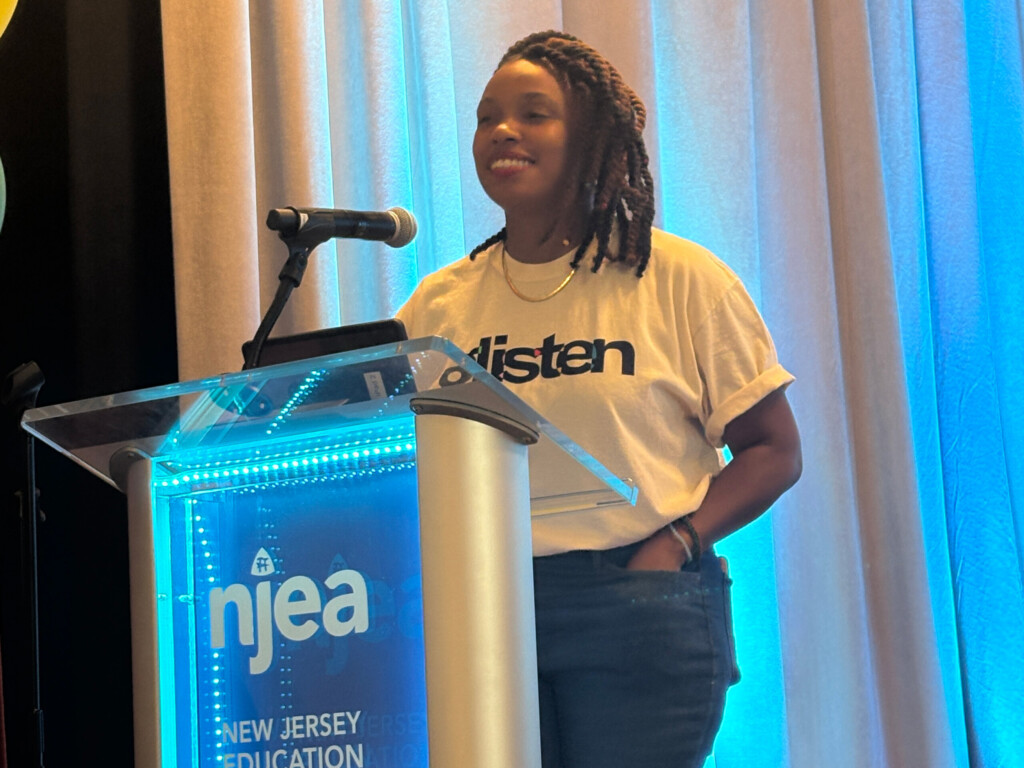
Civil rights activist Audre Lorde once said, “You do not have to be me in order for us to fight alongside each other.” This sentiment perfectly embodied the spirit of the fourth annual Carol Watchler LGBTQIA+ Advocacy Conference this past June.
As educators, we all strive to create school environments where students feel emotionally and educationally safe. This year’s workshops moved beyond mere awareness, empowering educators with tools for active allyship. The day started with a tribute to our LGBTQIA+ legacy makers—Carol Watchler, Patrick Rumaker, Rich Wilson, Tom Tamburello and Sue Maurer—whose history of queer advocacy in the NJEA inspired attendees to build a more inclusive future. Sessions like “Advocacy and Action” and “Using PEP to Organize” brought the day’s central theme of intersectionality to life. They served as a powerful reminder that while our struggles may be different, our privileges can be leveraged to lift each other up.
A major highlight was exploring strategies for curricular inclusion. Attendees learned to design engaging lessons centered on LGBTQIA+ histories, directly aligning with New Jersey’s LGBTQIA+ and individuals with disabilities curriculum mandate. This is truly the “why” behind our conference. Teaching the truth ensures we don’t leave out the essential people who have shaped history, science and art. Hearing from representatives of the NJEA Consortium and the NJ Department of Education’s LGBTQIA+ Youth Equity Commission, drove home a vital point: representation matters. Studies prove that when students see themselves in their lessons, they thrive, while peers benefit by growing more culturally competent. In New Jersey, this is our collective mission.
As advocates, we “…fight alongside each other.”
Ultimately, the most vital word in the conference’s title is advocacy. True to the NJEA’s commitment to being a justice-centered union, advocacy means activating our collective power to champion academic freedom. While we are challenged in many ways, defending academic freedom stands out as a core focus. Without it, we cannot fully fight for an equitable future, nor can we ensure our school communities remain safe, affirming spaces where diverse voices are unified and protected.
NJEA Vice President Petal Robertson captured this beautifully during her conversation with keynote speaker Melanie Willingham-Jaggers, executive director of Glisten, noting that the conference “…placed the necessary importance on intersectionality.” We practice true solidarity by constantly working to uplift our most marginalized populations, ensuring that the fight for LGBTQIA+ justice is deeply intertwined with racial, disability and labor justice to ensure vulnerable voices are amplified.
Why do I attend? Because we are a family. We recognize when our peers are hurting and we lift our union siblings up when they need it most. While it is always wonderful to reunite with familiar faces, seeing so many new attendees gives me profound solace. Their presence affirms a stark reality: the need for advocacy is evident, the need to act is imminent and the need for camaraderie and solidarity is paramount.