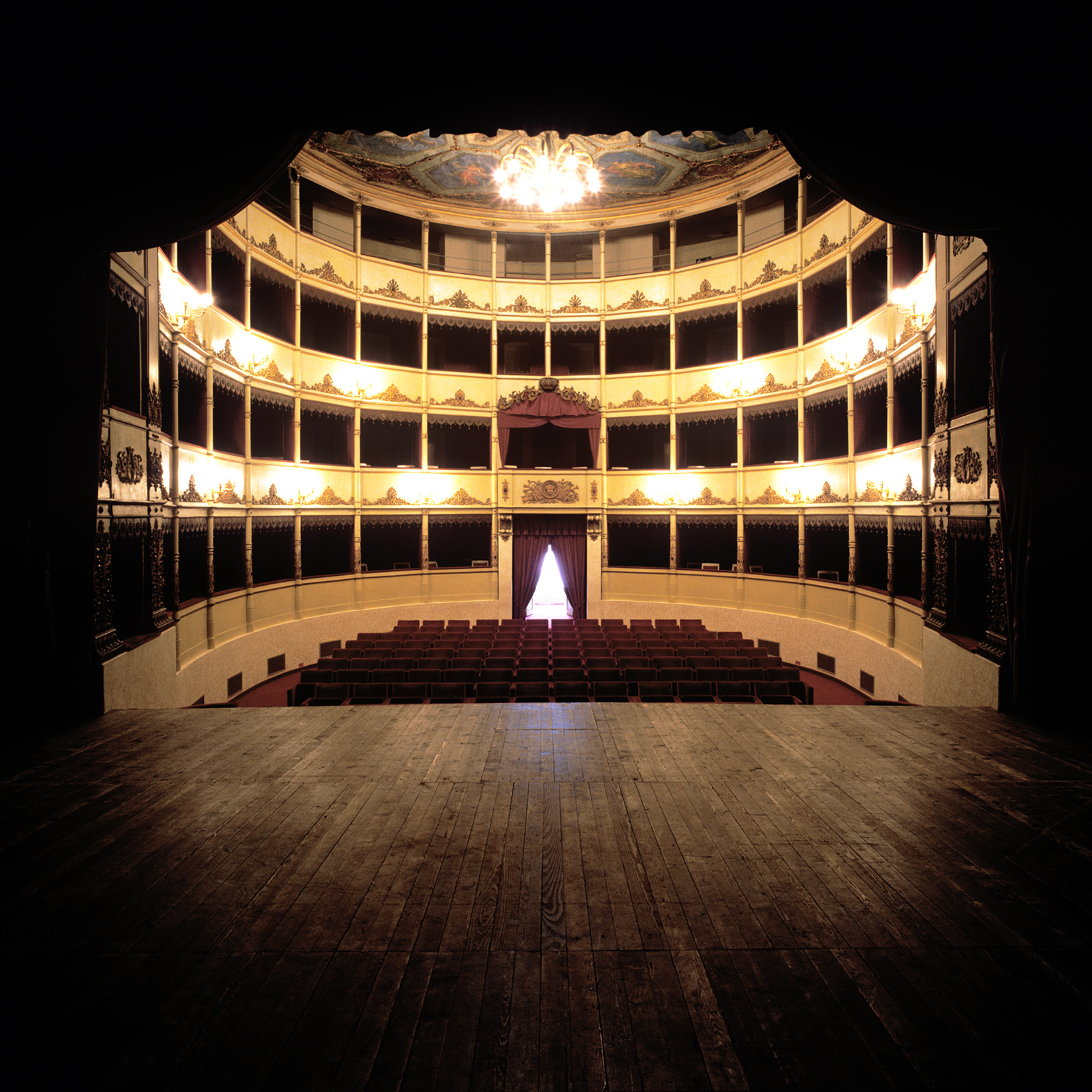
A moment before the curtain
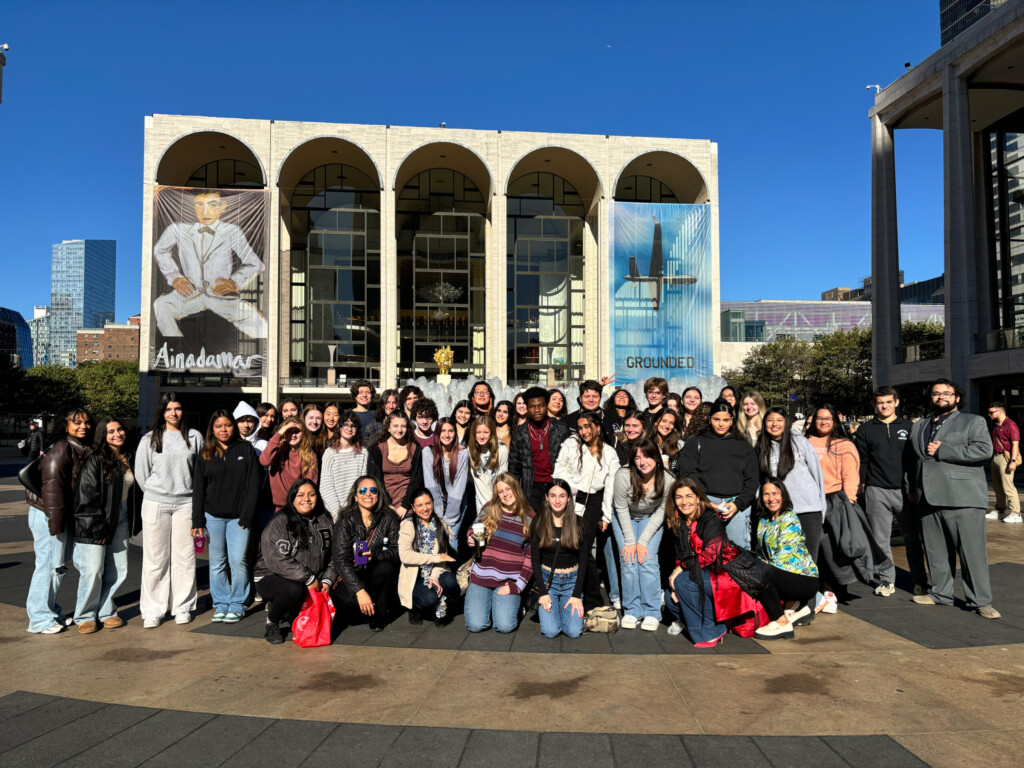
As my students and I gathered around the fountain in the Lincoln Center Plaza for a quick group picture before “Madama Butterfly,” I glanced up and froze. There he was: one of the puppeteers. In Anthony Minghella’s acclaimed production, Bunraku-style puppetry, a 300-year-old Japanese tradition, brings Butterfly’s child to life through three black-cloaked puppeteers working together so precisely that the audience sees only the puppet, not the artists behind it. I recognized one of them immediately from a behind-the-scenes video I had shown my students while preparing for the trip. I went straight over, introduced myself, and asked if he would take a picture with my students. He looked shocked that I had recognized him, but he kindly agreed. Afterward, several students asked questions, eager to learn more about his artistry and skill. Before we had even entered the Metropolitan Opera, the experience felt personal and alive.
Inside, the mood changed. The noise from outside faded as students looked up at the chandeliers, murals, costumes and sheer scale of the room. For many of them, this was their first opera and their first time entering a place shaped by beauty, history and artistic purpose. Even before the music began, they sensed that this was something larger than a field trip.
What students carry out of the opera house
Whenever I hear people say opera is a dying art form, I think of my students sitting in silence during a powerful scene, then carrying that experience with them long after the curtain comes down. I have watched teenagers become absorbed in stories of love, loss, betrayal, identity, hope, sacrifice and injustice. I have seen them lean forward as tension builds, go still in heartbreak and leave still talking about a choice a character made, a scene that unsettled them or a voice they cannot forget. Opera does not ask students to observe emotion from a distance. It pulls them inside it.
I do not simply ask whether they “liked it.” I ask why a moment felt devastating and why the music struck them so deeply. Their replies prove that long after the curtain falls, the opera continues working on them.
For Dukelly Emmanuel ’25, the stories feel immediate and alive. He reflects on “how powerful and modern the stories actually feel. It’s more than just music; it’s a whole different way of seeing art and history come together, and I’m really glad I got to be a part of it.”
For Anna Stern ’26, watching “Ainadamar” in Spanish turned classroom learning into a lived experience. “It is still one of the coolest things I’ve experienced during my Spanish language journey,” Anna shared. “I realized that I could actually understand the language of the show as it played out in front of me.”
Mikaela Cabrera ’28, was struck by the vocal talent and control on display: “Even if I couldn’t understand what they were saying because it was in Italian, I could still understand what talent that singing and control takes. I was truly amazed.”
Joel Noonan ’15, now a music educator who still returns to join these trips even after graduating, reflects: “Opera has allowed me to appreciate the various arts more and more over the years. As a student who toured the backstage of the Met Opera, I was fascinated by all the work that goes into putting together such a production. It made watching the opera even more mesmerizing. Opera is not just a musical work, but a work of visual art, theater, poetry, fashion design, and architecture. It is a staple of our country’s artistic culture, as well as the world’s.”
Joshua Ozawa-Morriello ’18, pointed out that “being on trips like these make students want to explore more and encourages the curious mind to think outside the ‘safety net’ of their own lives to live in the shoes of others.”
Maya Zislin ’28, from Pascack Hills High School emphasizes the connections these trips create between disciplines and students. “I think it is such a great experience to be able to combine different curriculum paths when attending these trips. It’s so fun to listen to vocal arts outside of the classroom as well as spend time with students in different classes!”
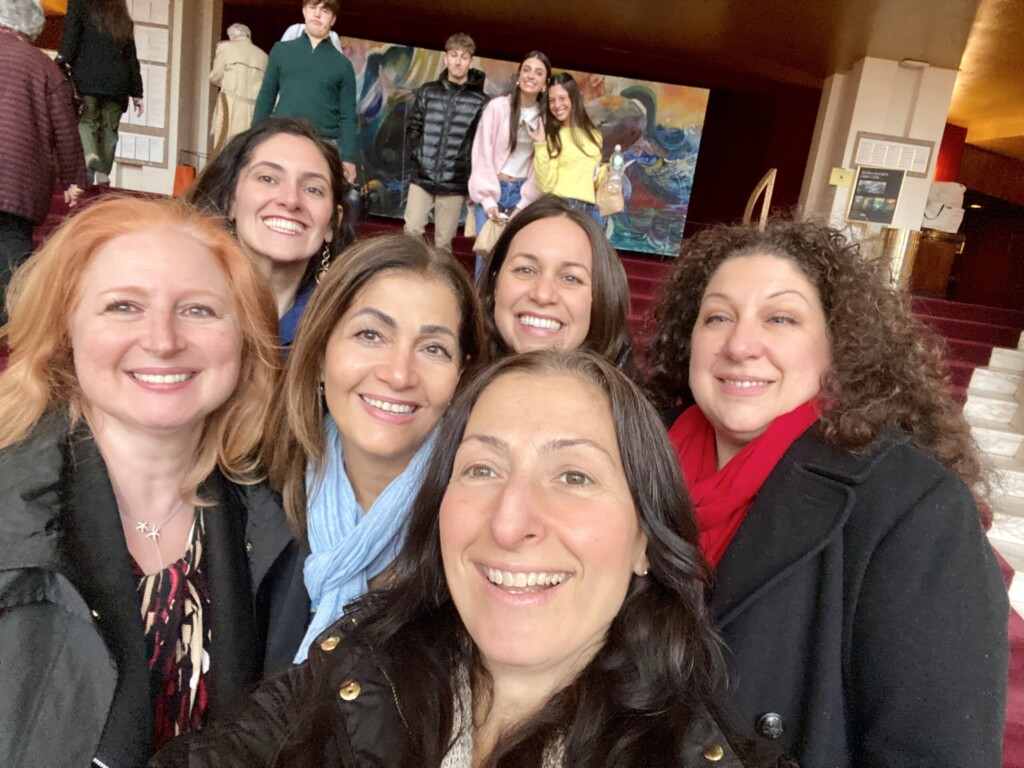
Why this matters to me
I care so deeply about giving students these experiences because opera shaped me long before I ever began bringing them to it. One of my most powerful childhood memories is seeing “La Traviata” with Plácido Domingo and Teresa Stratas. I still get goosebumps when I think about the final scene, when Violetta dies in Alfredo’s arms. Verdi’s music overwhelmed me then, and it still does now. It taught me that music can reach the deepest parts of human experience in a way almost nothing else can. That is what I want my students to encounter for themselves: not my exact memory, but that same moment when art stops feeling distant and becomes personal.
But that kind of connection does not happen by accident. It requires preparation.
Preparation makes the experience possible
Before we ever board a bus, we build the world students are about to enter. We talk about plot, character, historical setting, cultural context and emotional stakes. We discuss sacrifice, power, identity, representation and perspective. We look at images, watch selected clips and ask how music reveals meaning beyond words alone. Students begin to understand that opera is not just “people singing.” It is storytelling through music, theater, visual design and symbolism.
Why interdisciplinary collaboration matters
Interdisciplinary collaboration makes the effects of preparation even stronger. Some of the richest opera experiences I have created have come through working with colleagues in World Languages, Theater, English and History, helping students connect opera to stories they already know and care about. In recent years, that collaboration has also expanded to include our sister school, Pascack Hills, supported by district funding I secured while serving in a supervisory role. When students can trace parallels between Gounod’s “Roméo et Juliette” and Leonard Bernstein and Stephen Sondheim’s “West Side Story,” Puccini’s “La Bohème” and Jonathan Larson’s “Rent,” Puccini’s “Madama Butterfly” and Claude-Michel Schönberg and Alain Boublil’s “Miss Saigon,” or Verdi’s “Aida” and Elton John and Tim Rice’s “Aida,” the art form becomes more immediate and accessible. That same cross-disciplinary approach has shaped our work around productions such as “La Bohème,” “La Traviata,” “Madama Butterfly,” and “Ainadamar,” each opening different conversations about love, sacrifice, identity, culture, poetry, and history. Soon, we plan to attend “El Último Sueño de Frida y Diego” with our Spanish teachers and their classes, continuing the work of helping students connect opera to the broader human stories they can recognize, understand and appreciate.
Backstage changes everything
Backstage tours add another important layer. When students go behind the curtain, they begin to grasp the scale of what they are seeing. They realize how many people it takes to bring an opera to life—singers, musicians, conductors, stage managers, carpenters, costumers, technicians, designers and more. Suddenly, opera is no longer just a performance to watch. It becomes a vast collaborative effort.
That matters, especially for students who may not see themselves as performers. Backstage experiences help them realize that there are many ways to belong in the arts. Some may be drawn to singing; others may begin to imagine themselves in design, production, management, technical theater or storytelling.
Opera should be taught not as a relic of the past, but as a living art form that still speaks urgently to the present.
Reflection keeps the experience alive
Reflection after the trip matters just as much. Students need opportunities to process what surprised them, what moved them and what challenged their assumptions. In those reflections, teachers can see clearly that the experience did not end when the bus ride home began. Students are still making meaning, connecting what they saw to history, literature, language, visual art and their own lives.
Tips for educators: Start small, use the support
For educators who may be wondering whether their own students would connect with an art form like this, my answer is simple: try it. Start with one production. The Metropolitan Opera’s education department makes that first step much more doable; school groups can attend final dress rehearsals during the day, with ticketing based on a sliding scale, and Title I schools can receive complimentary access for a limited number of students. The Met also provides educator guides, audio tracks, illustrated synopses, and other online resources that make preparation far easier for teachers new to opera. Schools with funding can also bring in teaching artists for residencies or workshops that introduce students to the text, music and historical context through hands-on activities. With that kind of scaffolding, opera becomes much more approachable to teach for the first time.
Opera as a living art form
Opera remains one of the most powerful educational and emotional experiences I can offer students. It asks them to listen closely, think deeply and feel more fully than they may be used to in a classroom. It confronts them with beauty, pain, longing, sacrifice, injustice and hope, and reminds them of what art can do. Opera should be taught not as a relic of the past, but as a living art form that still speaks urgently to the present. It is alive when students sit in stunned silence during a powerful scene and it continues to live on as they carry that experience with them and discover that they have been changed by it.